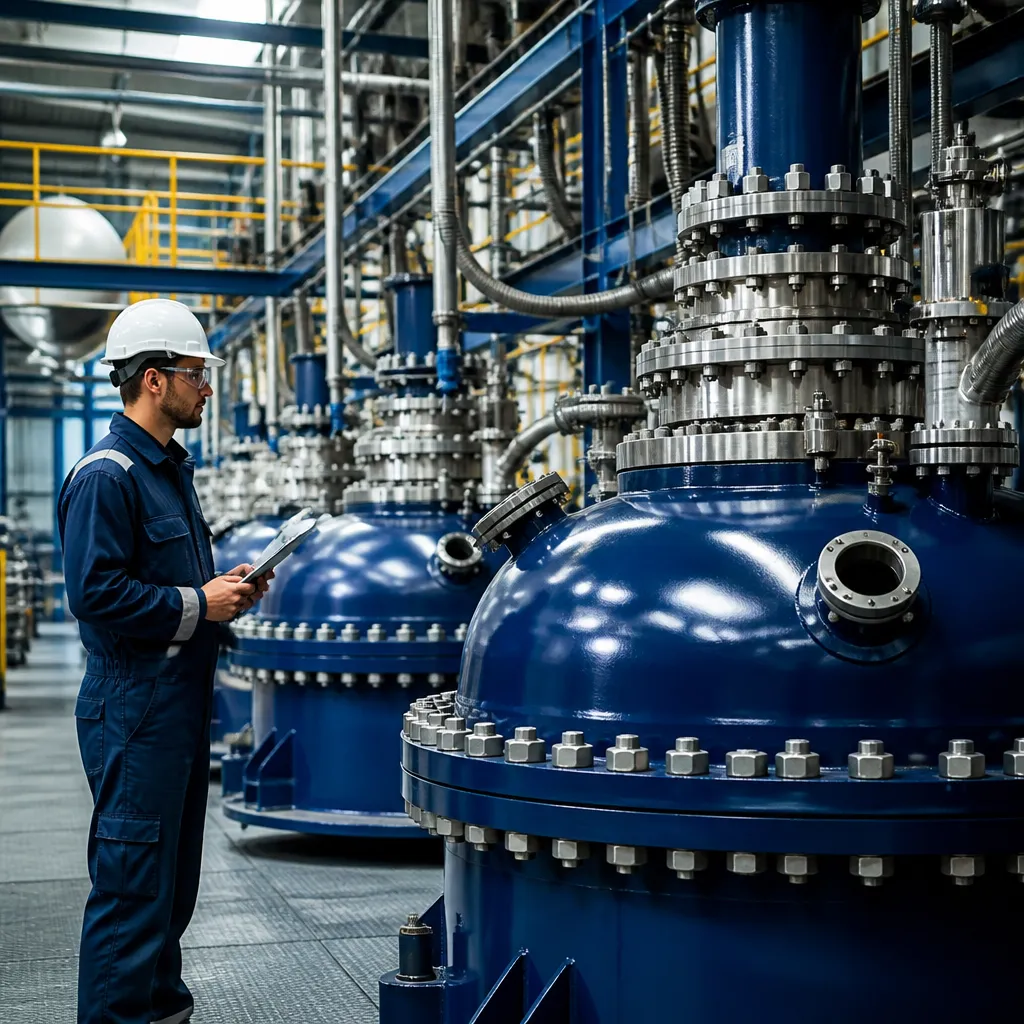
In the world of industrial chemical processing, the choice of reactor material is not a minor operational decision — it is a foundational one. Whether you are managing pharmaceutical synthesis, fine chemical production, or specialty polymer manufacturing, the reactor you select will directly influence product purity, equipment longevity, and overall process efficiency. Over the past decade, glass lined reactors have emerged as a preferred solution across a wide range of industries, outpacing traditional alternatives in both performance and cost-effectiveness. Understanding what drives this shift requires a closer look at the science, the economics, and the real-world outcomes that plant operators are reporting.
The Core Challenge: Corrosion, Contamination, and Cost
Industrial reactors face a relentless set of challenges. Corrosive acids, reactive solvents, and high-temperature processes all conspire to degrade reactor walls over time. When a reactor wall degrades, the consequences are not merely mechanical — they are chemical. Metal ions can leach into the product stream, compromising purity and triggering costly batch rejections. In regulated industries like pharmaceuticals and food processing, even trace contamination can result in compliance failures and significant financial penalties.
Stainless steel reactors, while robust in many applications, are particularly vulnerable to chloride-induced corrosion and attack from strong acids. They also require frequent inspection and surface treatment to maintain their integrity. This ongoing maintenance burden adds up — both in direct costs and in production downtime. Plant managers who have transitioned to glass lined alternatives frequently cite reduced maintenance cycles as one of the most immediately tangible benefits.
What Makes Glass Lining a Superior Barrier
Chemical Inertness at the Molecular Level
Glass, as a material, is chemically inert across an exceptionally broad range of substances. When fused to a steel substrate at temperatures exceeding 800 degrees Celsius, it forms a non-porous, smooth surface that resists attack from virtually all organic solvents, most acids, and a wide spectrum of reactive compounds. This inertness is not passive — it is an active protection mechanism that prevents any chemical interaction between the reactor wall and the process fluid. For manufacturers producing high-value compounds where product integrity is non-negotiable, this characteristic alone justifies the investment.
Thermal Stability and Process Flexibility
Glass lined reactors are engineered to handle significant thermal variation. They perform reliably across a temperature range that accommodates most industrial chemical processes, from cryogenic applications to high-temperature reactions. This thermal stability, combined with the glass surface’s resistance to thermal shock when properly managed, gives process engineers the flexibility to design more aggressive reaction profiles without compromising equipment integrity. The result is a reactor that adapts to the process rather than constraining it.
A Closer Look at the Comparative Advantages
Understanding the glass lined reactor benefits requires a direct comparison with stainless steel alternatives. While stainless steel offers excellent mechanical strength and is suitable for many neutral or mildly reactive processes, it falls short in several critical areas. First, its susceptibility to pitting corrosion in halide-rich environments means that processes involving chlorinated compounds or hydrochloric acid can rapidly degrade the reactor surface. Second, stainless steel’s metallic surface can catalyze unwanted side reactions in sensitive chemical processes, introducing variability that is difficult to control. Glass lining eliminates both of these concerns by providing a chemically neutral, non-catalytic surface that remains consistent throughout the reactor’s operational life.
Operational Efficiency and Long-Term Economics
Reduced Cleaning and Turnaround Time
The smooth, non-porous surface of glass lining significantly reduces product adhesion and residue buildup. This translates directly into faster cleaning cycles between batches, which is a critical advantage in multi-product facilities where reactor turnaround time directly impacts throughput. Operators report that cleaning validation — a particularly time-consuming requirement in pharmaceutical manufacturing — is considerably more straightforward with glass lined equipment due to the predictable and consistent surface characteristics.
Lifecycle Cost Analysis
While the initial capital cost of a glass lined reactor may be higher than a comparable stainless steel unit, the total cost of ownership tells a different story. Reduced maintenance frequency, longer service intervals, lower cleaning costs, and fewer batch rejections due to contamination all contribute to a favorable lifecycle cost profile. When plant managers conduct a thorough cost analysis over a five to ten year horizon, glass lined reactors consistently demonstrate superior economic performance. This is particularly true in high-value product applications where the cost of a single contaminated batch can dwarf the price differential between reactor types.
Logistics and Supply Chain Considerations for Process Plant Equipment
Acquiring and deploying industrial process equipment like glass lined reactors involves more than just the purchase decision. Logistics, shipping, and tracking of large industrial components are critical operational considerations. For facilities managing international procurement, keeping tabs on shipments is essential to maintaining project timelines. Tools that allow teams to track Wan Hai container shipments in real time can be invaluable when coordinating the delivery of heavy process equipment across global supply chains. Delays in equipment arrival can cascade into significant project overruns, making reliable tracking a genuine operational priority.
Maintenance Best Practices for Glass Lined Equipment
Maximizing the service life of a glass lined reactor requires adherence to a set of well-established maintenance practices. Regular spark testing of the glass surface is the primary method for detecting micro-cracks or holiday defects that could allow process fluid to reach the underlying steel substrate. When defects are identified early, they can typically be repaired using approved glass lining repair kits without requiring full reactor replacement. Operators should also pay close attention to agitator design and installation, as mechanical contact between the agitator and the glass surface is one of the most common causes of lining damage in service.
Temperature management is equally important. Rapid thermal cycling — particularly sudden cooling of a hot reactor — can induce thermal shock that compromises the glass lining. Establishing and enforcing heating and cooling rate protocols is a straightforward measure that significantly extends equipment life. For facilities that also manage fluid circulation systems, understanding how recirculating pump systems work can provide useful context for optimizing thermal management across the plant. A well-designed hot water recirculating pump system illustrates the broader principle that consistent fluid temperature management protects both equipment and process integrity.
International Process Plants: A Trusted Source for Glass Lined Equipment
For organizations evaluating their reactor options, International Process Plants offers an extensive inventory of used and reconditioned glass lined reactors sourced from reputable manufacturers. Their team brings deep technical expertise to the evaluation and refurbishment of process equipment, ensuring that every unit meets rigorous quality standards before it reaches the customer. Whether a facility is expanding capacity, replacing aging equipment, or establishing a new production line, International Process Plants provides a cost-effective pathway to acquiring high-quality glass lined reactors without the lead times associated with new equipment orders.
Conclusion: A Strategic Investment in Process Integrity
The decision to invest in glass lined reactor technology is ultimately a decision to prioritize process integrity, product quality, and long-term operational efficiency. As chemical manufacturing continues to face pressure from regulatory requirements, quality standards, and competitive economics, the advantages of glass lining become increasingly difficult to overlook. For plant operators who have not yet evaluated this technology in depth, the evidence strongly suggests that the time for that evaluation is now. The combination of chemical inertness, thermal stability, reduced maintenance burden, and favorable lifecycle economics makes glass lined reactors one of the most compelling investments available in modern process plant design.